If you are dreaming about owning waterfront land in the Charlevoix area, it is easy to focus on the view first. But with vacant shoreline property, the real value often comes down to what you can legally access, service, and build. Before you buy, you need to understand the local rules, site conditions, and approval path that can shape your plans and your budget. Let’s dive in.
Why waterfront land needs extra diligence
Charlevoix’s shoreline setting is a big part of its appeal. The city’s master plan notes that the area includes Lake Michigan, Round Lake, and Lake Charlevoix, with 5.86 miles of shoreline used for private access, public recreation, and scenic viewing. The same plan also identifies runoff as the biggest threat to Lake Charlevoix and connected waterways, which is one reason waterfront parcels often face more scrutiny than inland lots. You can review that context in the City of Charlevoix Master Plan.
For buyers, that means a waterfront parcel is not just about frontage or a beautiful setting. Drainage, vegetation, shoreline disturbance, and access can all affect what is possible on the site. A lot that looks simple at first glance may involve more review than expected.
Know which jurisdiction controls the parcel
One of the first steps is confirming whether the property is in the City of Charlevoix, Charlevoix Township, or Hayes Township. Those jurisdictions publish separate zoning materials, and the standards are not identical. A parcel with a Charlevoix mailing address may still fall under township rules rather than city regulations.
The City of Charlevoix zoning permits page is a useful starting point because it highlights how local approvals work and reminds buyers that zoning and building approvals are separate. This matters early, especially if you are comparing multiple waterfront lots with different development potential.
Start with zoning and lot rules
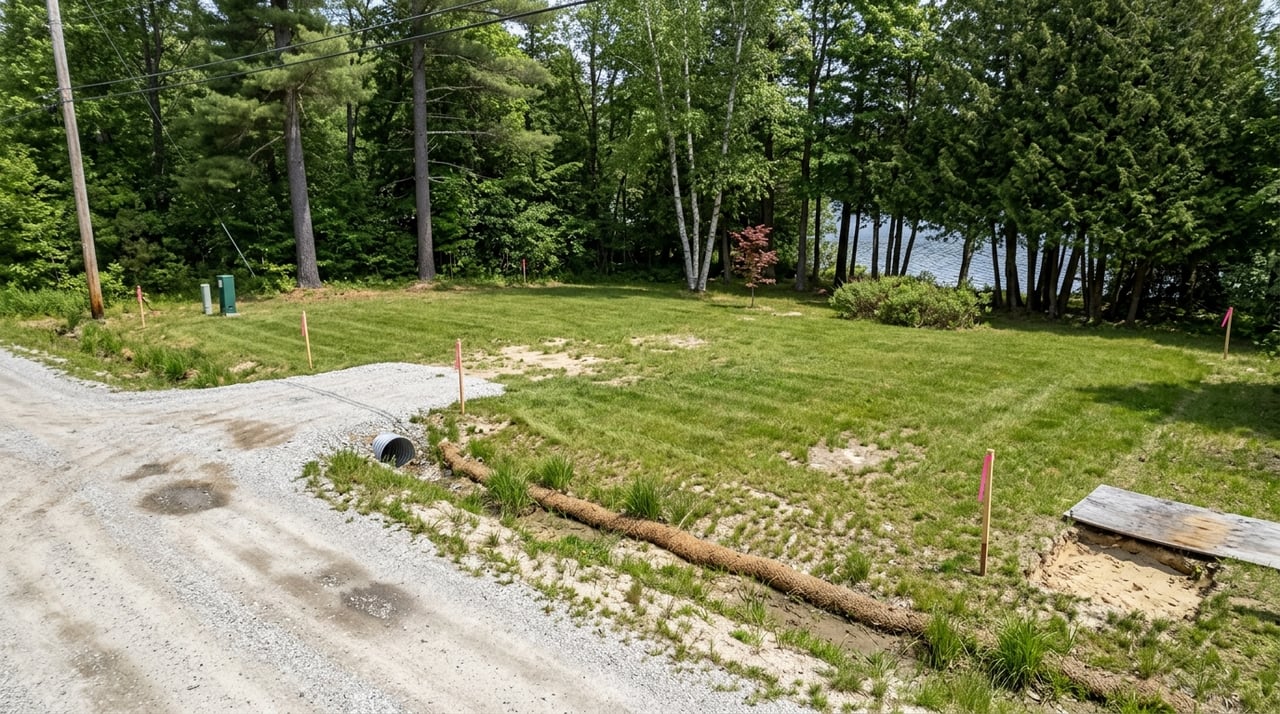
In the City of Charlevoix, a zoning permit is required before erecting or installing any building or structure. The city also requires a completed site plan, and property boundaries must be staked before the zoning permit is filed. If a project may need special land use or planned unit development review, the city recommends a pre-application meeting.
That process is important because many buyers assume they can sort out approvals after closing. In reality, a site plan, setbacks, and use restrictions can influence whether the parcel fits your intended home or project.
Township rules can add more waterfront-specific limits. Charlevoix Township’s zoning materials include sections on sewer and water facilities as well as shoreland protection regulations. Hayes Township’s waterfront provisions are even more specific, including standards that limit waterfront lots to one dock in the cited section, prohibit beach-sand fill in the shoreland protection strip, and require native vegetation restoration if that strip is disturbed.
Check parcel splits, access, and easements early
Waterfront buyers sometimes focus on frontage and overlook how the parcel is legally accessed. That can be a costly mistake. Hayes Township’s parcel-division ordinance requires proof that each resulting lot has or can have driveway or easement access to an existing road or street, along with adequate utility easements to public utility facilities.
In plain terms, lake frontage alone is not enough. You also need lawful access and a path for utilities if you want the lot to be buildable. That is why deed review, survey review, and easement review should happen early.
Charlevoix County’s Register of Deeds online search can help you begin researching recorded documents. The county notes that the index is provided for convenience and is not a warranty of accuracy, so it is wise to pair that search with a full title review.
Understand utilities before you fall in love
Utility availability can vary a lot across the Charlevoix area. In and near the city core, public water and wastewater service may be available. The city says its water treatment plant serves about 5,000 customers, and its wastewater system serves the City of Charlevoix as well as Charlevoix Township and Marion Township.
Outside those service areas, well and septic feasibility often become central questions. Charlevoix County’s building permit application asks applicants to identify water and sewage type and whether the site is in a floodplain or low-lying area. The county’s building requirements also state that septic and well permits are required when municipal sewer is not available.
That is a key buildability checkpoint. Before you commit to a waterfront parcel, make sure you understand whether public utilities are available or whether the site will depend on private systems approved through the Health Department of Northwest Michigan.
Review soils, drainage, and flood risk
Two waterfront parcels on the same lake can have very different site conditions. According to the USDA’s official Charlevoix soil series description, Charlevoix soils are very deep and somewhat poorly drained, with slopes typically ranging from 0 to 6 percent. That does not mean every waterfront lot has the same limitations, but it does show why parcel-specific soil review matters.
General assumptions are not enough when you are planning a home, driveway, septic field, or grading work. The USDA’s Web Soil Survey is the official source for current soil maps and data, and it can help you evaluate site conditions before closing.
Flood risk should be reviewed separately from soils. Charlevoix County’s permit application specifically asks whether a site is in a floodplain or low-lying area, and FEMA’s Flood Map Service Center is the official public source for flood hazard information. Even if a lot looks dry during a showing, mapped flood hazards can affect design, permitting, and long-term costs.
Shoreline permits can change the budget
Shoreline property often involves permits beyond basic zoning and building approval. Charlevoix County’s building requirements say a soil erosion permit is needed if a project is within 500 feet of a lake or stream or if more than one acre of earth is disturbed. The same checklist also says the building package must include any other applicable wetlands, critical dunes, or high-risk erosion permits.
At the state level, Michigan EGLE uses a Joint Permit Application for wetlands, floodplains, inland lakes and streams, Great Lakes bottomlands, critical dunes, environmental areas, and high-risk erosion areas. EGLE also states that if a parcel lies in a designated High-Risk Erosion Area, a permit is required for construction on any portion of that parcel, even if the work is not directly at the shoreline.
That is an important detail for buyers. The shoreline edge is only part of the picture. Grading, retaining walls, driveways, and other improvements elsewhere on the parcel can still trigger review.
Don’t overlook stormwater and vegetation rules
Waterfront land has a strong visual pull, but environmental sensitivity is part of the ownership equation. Hayes Township’s stormwater ordinance states that stormwater drainage in excess of natural conditions should be retained on site. The City of Charlevoix’s master plan also points to runoff as a major local water-quality concern.
That means site design decisions can carry both practical and regulatory consequences. Clearing too much vegetation, changing grade, or disturbing shoreline areas may create added costs or approval issues later. For many buyers, this is where early conversations with local officials and site professionals save the most money.
Build your due diligence team before closing
Waterfront land purchases usually go more smoothly when the right people are involved early. Based on local and county approval paths, a strong due diligence team often includes:
- A surveyor
- A title professional or real estate attorney
- The local zoning administrator
- The county building department
- The local health department
- The road commission
- EGLE, and possibly USACE, if shoreline, wetland, or erosion concerns appear
The City of Charlevoix development guide helps show why this matters. Different offices control different parts of the approval path, so no single conversation tells the whole story.
If you plan to build a custom home, it also makes sense to involve your builder and design team early. Charlevoix County’s permit application requires the builder’s license number, and homes over 3,500 square feet require an architect or engineer’s seal and signature. That can influence lot selection if your vision includes a larger or more complex design.
A smart order of operations
When you are evaluating waterfront land in the Charlevoix area, a practical sequence can help you avoid surprises:
- Confirm the governing jurisdiction and zoning district.
- Review the deed, survey, and any recorded easements.
- Verify legal road access and utility availability.
- Check floodplain, wetland, erosion, and soil conditions.
- Confirm sewer connection or septic and well feasibility.
- Review the likely permit path with local and county officials.
This order reflects the city, county, and state approval framework in the source materials. It is also one of the best ways to determine whether a parcel fits your goals before you are too far into a transaction.
What this means for buyers
Buying waterfront land in Charlevoix can be exciting, but it should also be methodical. A parcel may offer shoreline, views, and privacy, yet still present major challenges if access, utilities, soils, or shoreline regulations do not line up with your plans.
The good news is that most surprises can be reduced with the right research upfront. If you want a local partner who can help you think through waterfront land opportunities in Northern Michigan, connect with Davis Labelle to schedule a free consultation.
FAQs
What should you check before buying waterfront land in Charlevoix?
- You should confirm jurisdiction, zoning, legal access, easements, utility availability, soil conditions, flood risk, and any shoreline or erosion permitting requirements.
Can you build on any waterfront lot in the Charlevoix area?
- Not automatically. Buildability depends on zoning, access, utilities, soils, floodplain or erosion status, and any applicable local, county, or state permits.
Do waterfront lots in Charlevoix always have sewer and water service?
- No. Some lots in or near the city may have public utility access, but many parcels outside those service areas require septic and well review.
Do you need special permits for shoreline work in Charlevoix County?
- In many cases, yes. Projects near lakes or streams may require soil erosion permits, and some parcels may also involve wetlands, high-risk erosion, floodplain, or other state-level permit review.
Why does access matter when buying Charlevoix waterfront land?
- A waterfront parcel needs more than water frontage. Lawful driveway or easement access and a workable utility path can be critical to whether the lot is actually usable and buildable.