Thinking about buying an investment property in Petoskey? It is easy to see the appeal. Between four-season tourism, a walkable downtown, and steady interest from both local and out-of-area buyers, Petoskey can look like a strong place to invest. But this is also a market where zoning, licensing, and day-to-day operations matter just as much as the purchase price. In this guide, you will get a practical overview of how to start evaluating Petoskey investment properties with more confidence. Let’s dive in.
Why Petoskey attracts investors
Petoskey is a small market, which means every property decision tends to be more location-specific than in a larger metro. The U.S. Census QuickFacts for Petoskey estimates the city population at 5,810 in 2024, with 33,775 people in Emmet County. The same source reports a median owner-occupied home value of $364,100 in the city and $315,700 countywide.
What makes Petoskey stand out is its visitor economy. According to Petoskey area quick facts, the region includes a six-community corridor with more than 2,800 rooms, plus year-round recreation like boating, fishing, hiking, golf, skiing, and snowmobiling. The area also benefits from direct air service through Pellston Regional Airport, which helps support demand from both nearby and remote buyers.
That tourism base creates opportunity, but it also creates a more seasonal investment landscape. If you are looking at income property here, it helps to think beyond broad averages and focus on the exact use, location, and operating plan for each property.
Start with the right property type
Not every investment property fits Petoskey the same way. Some options are more straightforward than others, especially when you factor in zoning and licensing.
Duplexes and small multifamily
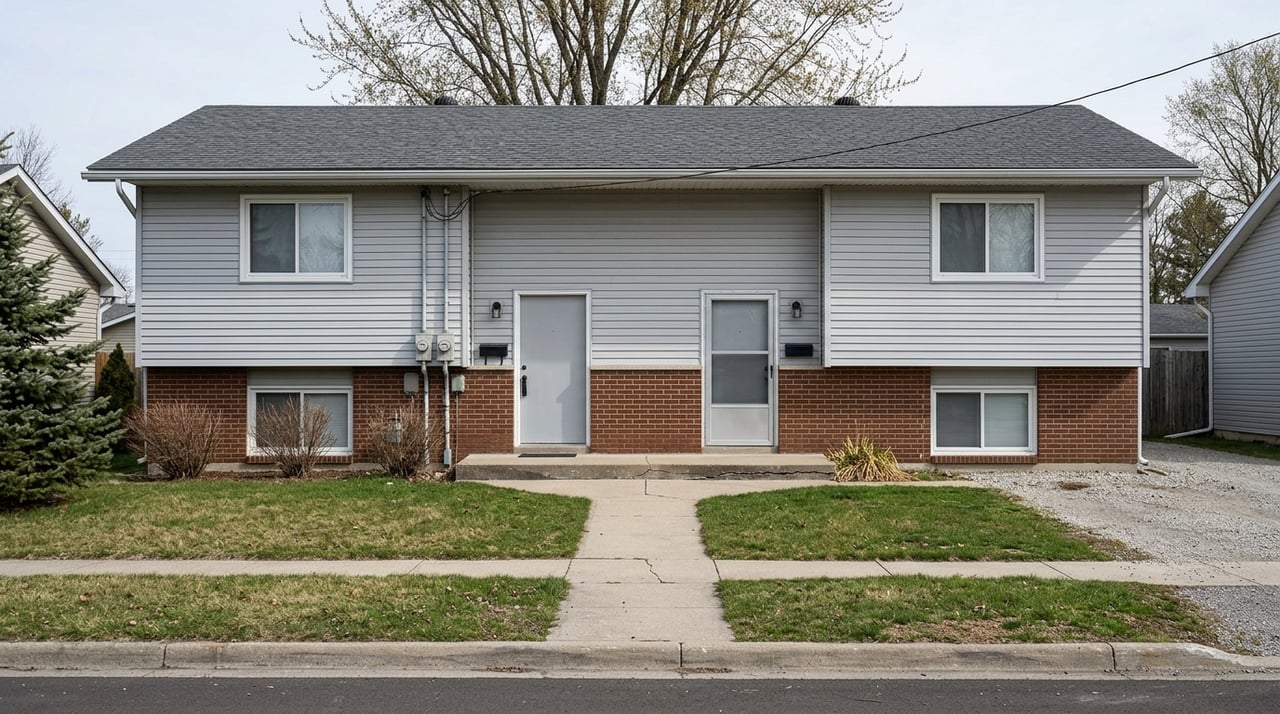
For many buyers, duplexes and small multifamily properties can be one of the more approachable entry points. The city identifies residential districts including R-1, R-2, R-3, RM-1, and RM-2, where single-family or multi-family residences are principal uses permitted as of right, according to the city zoning packet.
That does not mean every parcel works for every plan. You still need property-level due diligence. Still, it does show that smaller income-producing residential properties are part of Petoskey’s local housing pattern.
Mixed-use downtown buildings
If you are drawn to downtown Petoskey, mixed-use buildings may deserve a closer look. The city’s short-term rental zoning rules allow STRs by right in several business districts including B-1, B-2, B-2A, B-2B, B-3, B-3A, and B-3B, with the important condition that, where applicable, they must be above the first story of the principal building, based on the same city zoning materials.
In practical terms, that makes downtown properties easier to evaluate as upper-floor residential or lodging opportunities above commercial space. It is not the same as assuming a whole building can automatically function as a vacation rental from top to bottom.
Vacation-oriented rentals
Vacation rentals are often the first property type buyers ask about in Petoskey. That interest makes sense given the area’s tourism profile, but this is also the most regulated option.
The city’s short-term rental application guide states that STR licenses must be applied for annually, expire on March 31 each year, and cannot be transferred with the property. If no license is available, an application becomes a waitlist registration. For an investor, that means you should never assume a property can continue operating as an STR just because it did so before.
Know the STR rules before you buy
In Petoskey, STR regulations are not a side issue. They are central to the deal.
Residential districts have limits
The city zoning materials explain that STRs are not eligible in residential districts unless they are grandfathered units that were already licensed before the ordinance took effect. Those grandfathered rights end on transfer, lapse, or revocation, according to the city packet.
This is one of the biggest points buyers miss. A property’s past use does not automatically guarantee your future use. Before you underwrite a deal as a short-term rental, you need to confirm the zoning district, license status, and whether any grandfathered rights would actually survive the sale.
Licensing comes with operating duties
The city’s STR guide also outlines meaningful management requirements. Owners must provide a local agent, maintain 24-hour call availability, and respond within 60 minutes. The guide also references insurance, floor plans, parking documentation, and annual inspection readiness as part of the application process.
That matters even more if you live out of town. A Petoskey investment can be attractive to remote owners, but the operating plan needs to be realistic from day one.
Violations can affect the investment
The city holds licensees responsible for issues such as noise, fireworks, trash, parking, occupancy limits, and annual inspection standards, based on the zoning packet. Licenses can also be lost for violations or unpaid fines.
That means operational discipline is part of your underwriting. In a market like Petoskey, a strong investment is not just about buying well. It is also about managing well.
Plan for seasonality and expenses
A common mistake with vacation-oriented property is assuming revenue will be consistent all year. Petoskey’s tourism profile suggests a different pattern.
Expect seasonal demand shifts
The area draws visitors in warm-weather months for boating, fishing, hiking, golf, and cycling, and in winter for skiing, snowmobiling, ice skating, and snowshoeing, according to the Petoskey Area Visitors Bureau. That points to likely peaks during summer and ski season rather than even occupancy every month.
If you are building projections, it is smart to stress-test slower shoulder seasons. A property can still work well, but the numbers should reflect the local pattern instead of a flat annual assumption.
Compare rent with full carrying costs
For long-term rental context, the Census reports median gross rent of $1,006 in Petoskey and $1,112 in Emmet County in the QuickFacts data. Those numbers can be useful as broad context, but they are not a substitute for property-specific analysis.
You will want to compare likely income against taxes, insurance, financing, maintenance, vacancy, management, and compliance costs. In other words, focus on real operating math, not just optimistic rent expectations.
Do not overlook logistics
In Petoskey, small operating details can have a real effect on performance. This is especially true for downtown, seasonal, or guest-oriented properties.
Parking and snow matter
The visitors bureau notes that winter parking rules in the city run from December 1 through April 1, and its seasonal materials also highlight substantial winter snowfall, according to Petoskey area quick facts. That means off-street parking, snow removal, and clear instructions are not minor issues.
For long-term rentals, these factors can affect tenant experience and maintenance planning. For short-term or mixed-use properties, they can affect guest satisfaction, turnover timing, and management costs.
Remote ownership needs a local plan
Because the area attracts out-of-area buyers, some investors naturally plan to manage from a distance. That can work, but not without trusted local support. The city’s STR guide specifically requires local responsiveness, and practical property oversight becomes even more important in a four-season market.
If you are buying from outside Northern Michigan, your team matters. Reliable local help can make the difference between a property that runs smoothly and one that becomes harder to manage than expected.
A simple framework for evaluating deals
When you start comparing Petoskey investment properties, it helps to use a simple checklist before you get attached to the idea of a deal.
Ask these questions first
- What zoning district is the property in?
- Does that zoning allow your intended use?
- If you are considering an STR, is a license available or would you be placed on a waitlist?
- Are any prior operating rights transferable, or do they end at closing?
- Is there enough off-street parking for the intended use?
- Who will handle local management, maintenance, and emergency response?
- How will seasonality affect your occupancy or leasing assumptions?
- Do the projected numbers still work after taxes, insurance, maintenance, and vacancy?
These questions can save you time, money, and frustration. In Petoskey, the strongest investments are usually the ones where use, zoning, and operations align clearly from the start.
Why local guidance helps
Petoskey is not a market where a generic investment formula always works. A downtown mixed-use building, a duplex, and a vacation-oriented condo may all look appealing on paper, but each one comes with a different set of rules, costs, and management realities.
That is why local, data-informed guidance matters. You want to understand not just the list price, but how the property fits the market, the zoning map, and your actual ownership goals.
If you are exploring investment property in Petoskey or anywhere in Northern Michigan, Davis Labelle offers free consultations and can help you evaluate opportunities with a practical, local perspective.
FAQs
What types of investment properties make sense in Petoskey?
- Common starting points include duplexes, small multifamily properties, mixed-use downtown buildings, and some vacation-oriented rentals, depending on zoning and licensing.
Can you use any Petoskey property as a short-term rental?
- No. Petoskey short-term rentals are regulated, and eligibility depends on zoning, license availability, and whether any prior rights apply to the property.
What should you verify before buying a Petoskey STR?
- You should verify the zoning district, current license status, waitlist issues, local agent requirements, parking, inspection readiness, and whether the intended use is allowed after transfer.
How seasonal is the Petoskey investment market?
- Petoskey is a tourism-driven market with stronger demand tied to summer recreation and winter activities, so it is wise to underwrite for seasonal peaks and slower shoulder periods.
Is Petoskey a good market for remote investors?
- It can be, but remote ownership works best when you have a strong local plan for property management, maintenance, guest or tenant communication, and compliance.
How can Davis Labelle help with Petoskey investment properties?
- Davis Labelle offers free consultations and local market guidance for buyers evaluating Northern Michigan properties, including opportunities that may fit investor or mixed-use goals.